The Oyster Reservoir
About this location
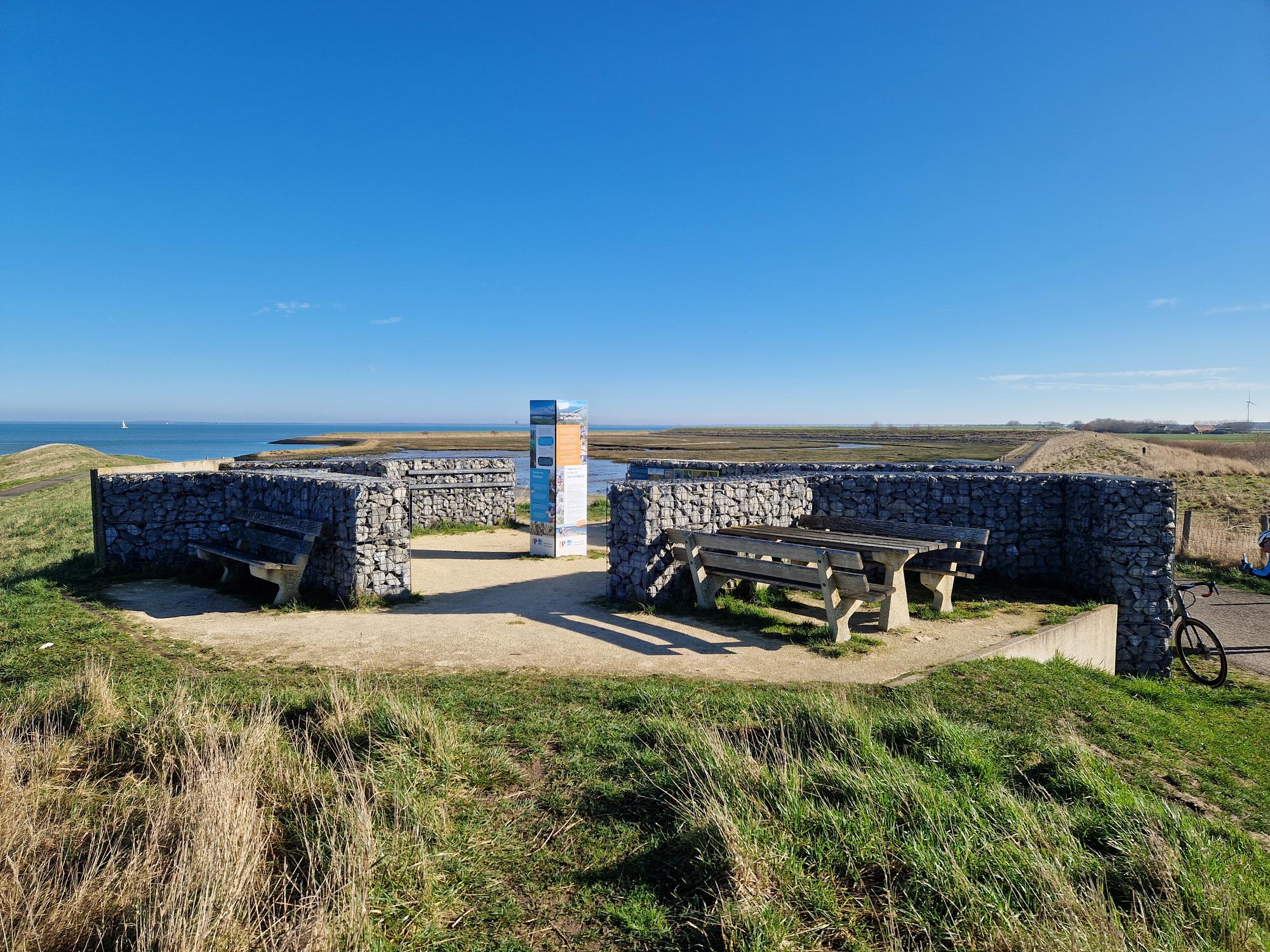
You might expect an oyster pit only in Yerseke. Yet this Oesterput (Oyster Pit) once served a comparable purpose. This inlaag — for that is what it is — could be characterised as a multi-functional tidal inlet.
An inlaag is a stretch of land between an old and a new dyke that was surrendered to the water. This happened in many places in Zeeland between 1500 and 1900, including on Noord-Beveland. As a result, the area became wet, brackish or salty, and was no longer suitable for agriculture. It also served as a safety buffer zone for the sea dyke. Later, the realisation came that such inlagen could also be practically useful. The Oesterput subsequently became an agricultural harbour, one of several on Noord-Beveland, from which sugar beets, potatoes, grain and manure were transported. Remnants of that small harbour are still visible today.
In the 20th century, the inlet took on a new role as an oyster purification site, since its location on the Eastern Scheldt was ideal for this purpose. After this function disappeared, the area developed into a nature reserve and part of the cultural-historical landscape. It is even the only stretch of saltmarsh with tides on Noord-Beveland. In 2016, a floating breeding island was constructed so that birds can breed undisturbed.
From the raised platform, you have a magnificent view over the inlagen, the Zeelandbrug and the island of Schouwen-Duiveland on the other side.