The Comma of Kortgene
About this location
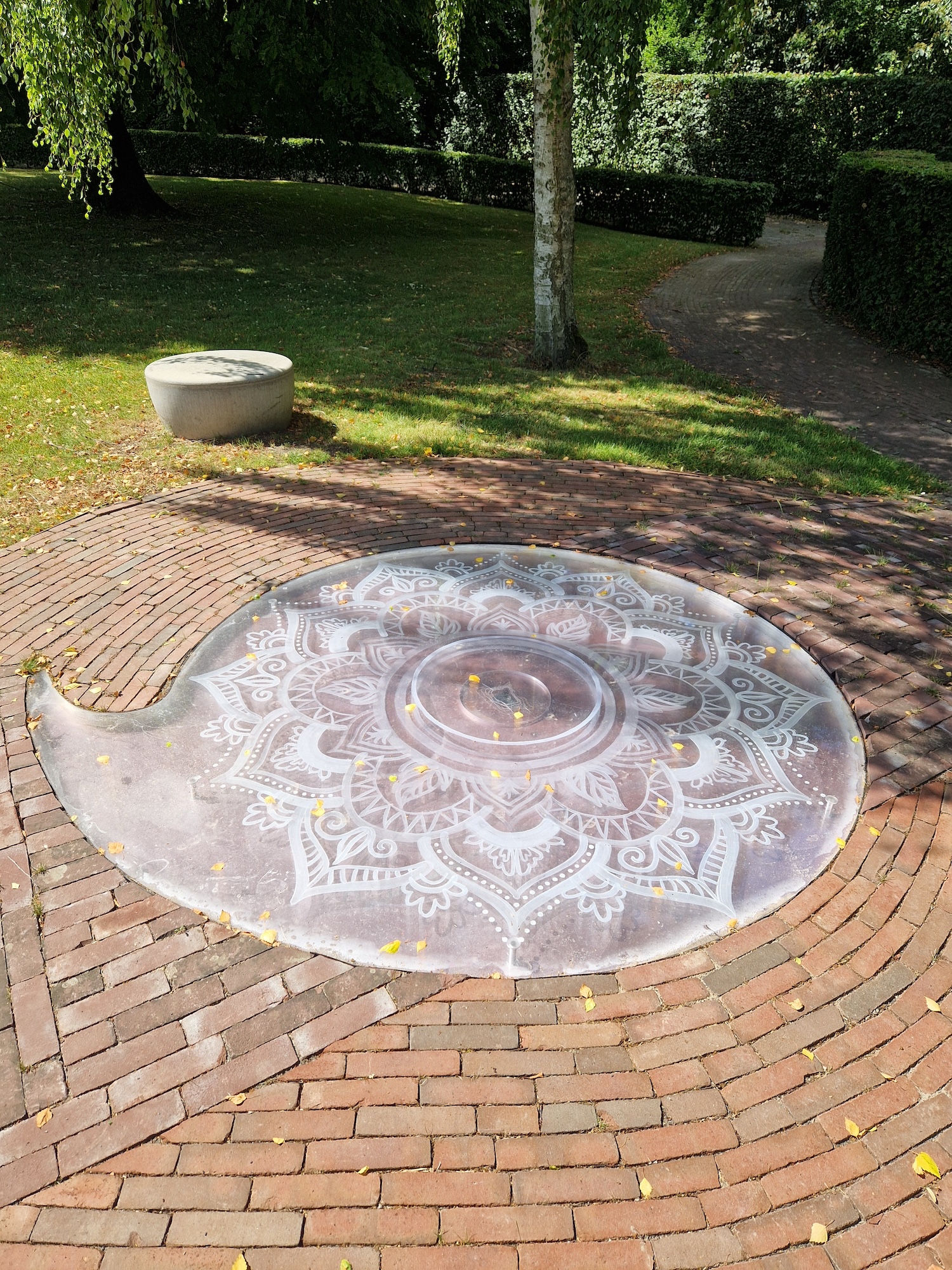
On the Hoofdstraat in Kortgene, a remarkable work of art can be admired: the Komma van Kortgene (the Kortgene Comma). Set into the pavement, this artwork incorporates the oldest piece of stone in the Netherlands — and when we say old, we mean truly old: approximately 420 million years.
The creator of the artwork is Bianca van Duyn from Kortgene. She tracked down the oldest stone in the Netherlands, which was brought to the surface in 1982 during oil drilling at a depth of two kilometres. The stone then sat in storage for decades. In 2021, Sander Houben of TNO Geological Survey discovered that this stone was far older than what had previously been considered the oldest stone in the Netherlands — a stone in Limburg that was "merely" 330 million years old.
The Kortgene stone dates from the Silurian period. Under the microscope, Houben found fossilised remnants of ancient plants in the rock. These grew where Zeeland now lies. Measurements also revealed that these were marine sediments, meaning the area was once submerged under water. The Silurian is one of the periods in the geological timescale, alongside the Devonian, Jurassic and Cretaceous. The Earth was still very much in development and humans were still far in the future. During this period, the first fish and plant species appeared.
Artist Bianca constructed the artwork from nine geological time periods, with the oldest stone placed at the centre. It's a beautiful thought that, when you stand on the comma, you can pause to consider what lies two kilometres beneath your feet: the oldest rock layer in the Netherlands, formed on a seabed during the Silurian era. For Bianca, the comma represents continuation, continuity and change. For her, a comma is not an end, but a pause.