Roof Tiles on the Everseweg
About this location
Yerseke and roof tiles share a remarkable history together. It's not just about tiles on houses, but about their surprising role in oyster farming and later in the landscape.
Around 1870, oyster farming took off in Yerseke. Oyster larvae need a hard surface to attach themselves to. Instead of natural shells, roof tiles were therefore used: cheap, available, and thanks to their rough, lime-rich structure, very well suited. When the tiles were full of young oysters, these were scraped off and further cultivated. In this way, Yerseke grew into an important centre of oyster culture and shellfish trade.
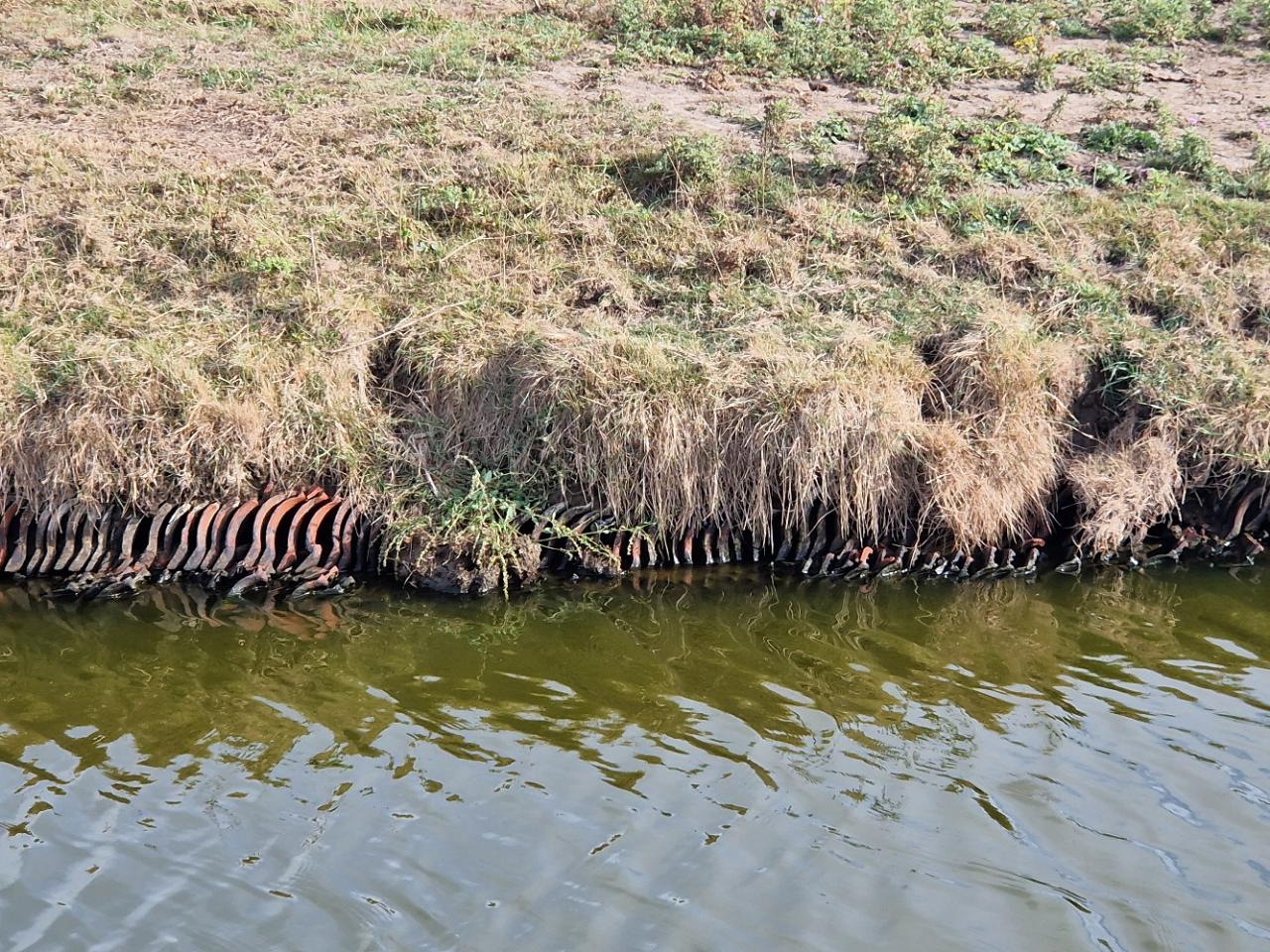
But the roof tiles gained yet another function. Along the ditches of the Everseweg and elsewhere in the Yerseke Moer, dozens or even hundreds of discarded roof tiles can be found in the banks. Used as revetment, they protect the ditch edges against erosion and subsidence.
From roof tile to oyster seed and back to the landscape.