Oyster Pits
About this location
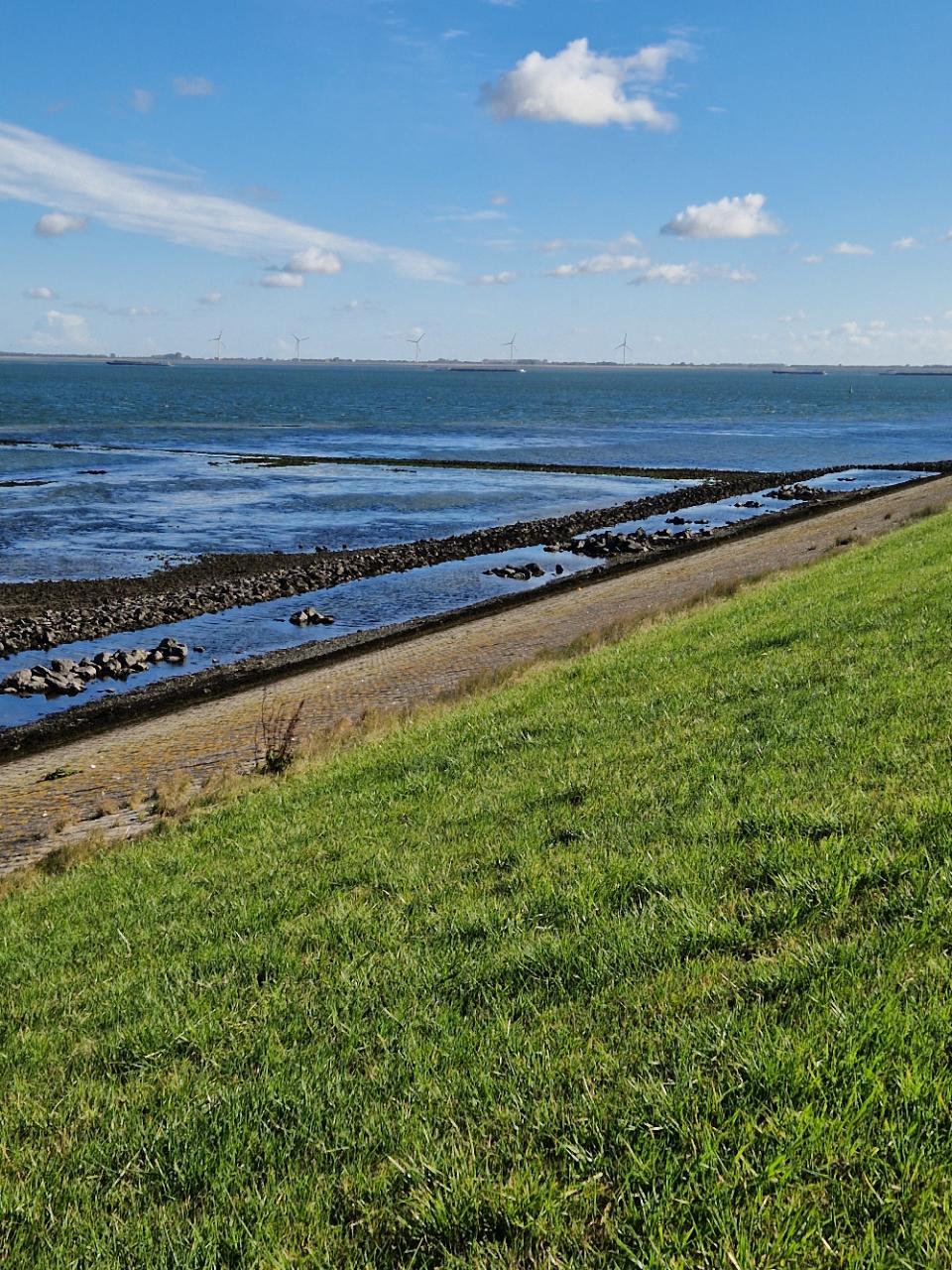
Between Kattendijke and Wemeldinge, the remains of old oyster pits can still be found in the Eastern Scheldt. At low tide, the rectangular structures become visible in the mudflats: silent witnesses to a time when a flourishing oyster industry developed here.
That history began in 1866, when the Portuguese oyster was brought to Zeeland as an experiment. It grew faster and seemed more resistant to disease than the native flat oyster. After 1870 the Portuguese oyster became dominant, until the severe winter of 1962/1963 largely put an end to that.
In the 1970s the Japanese oyster was introduced, now known as the Zeeland creuse. It grew even faster and became the most important commercial oyster. As a result, the flat oyster became rarer and more exclusive.
The growing oyster industry from the late nineteenth century onwards led to investment in oyster pits and purification installations. Demand from France and Belgium and improved connections by rail, water and road stimulated trade. What remains are silent traces of a time when the water was worth its weight in gold.